
Structural Honey Bee Removal
Live removal for honey bees inside walls, soffits, roofs, sheds, and other enclosed spaces.
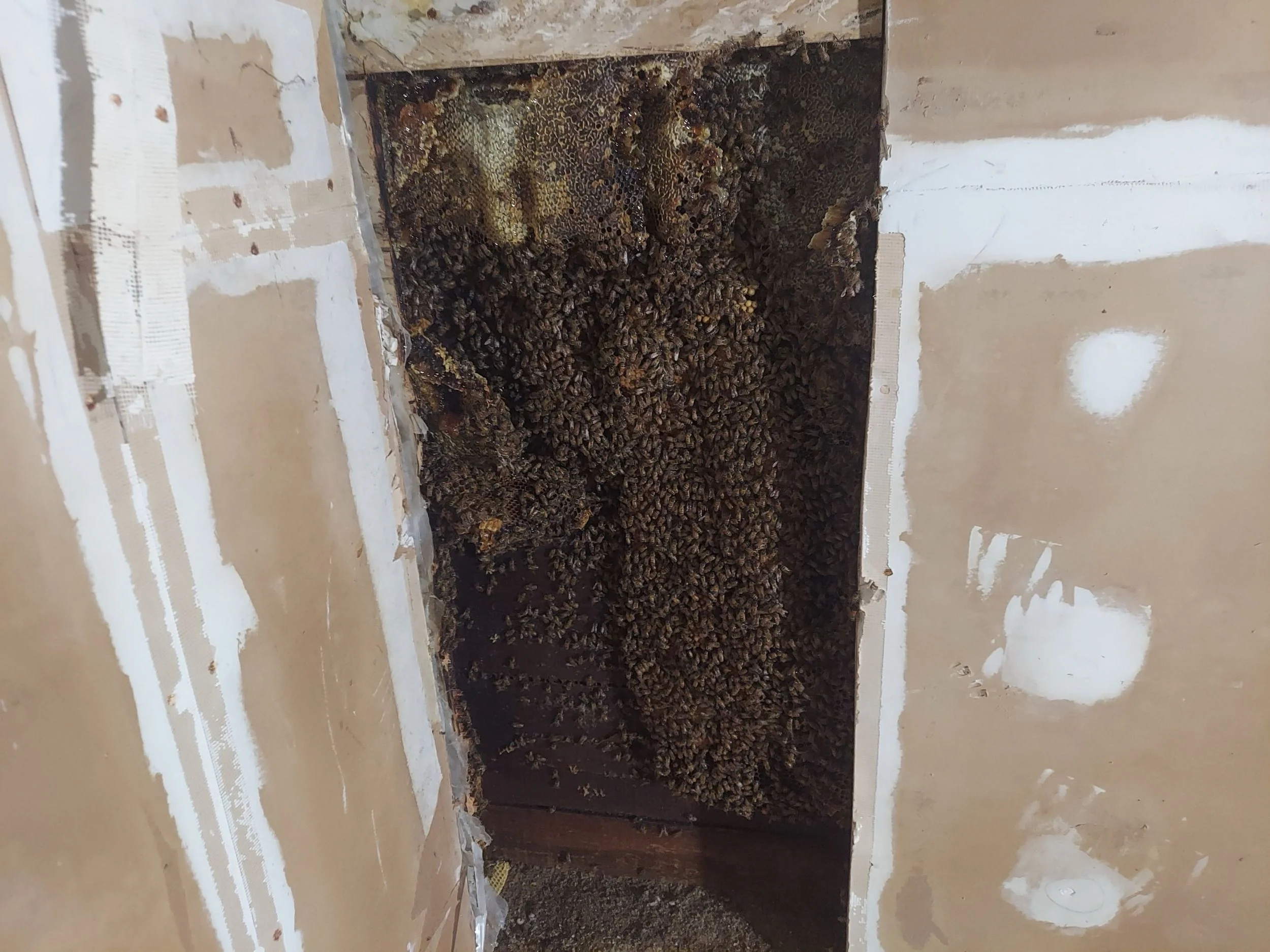
What Is a Structural Cutout?
A cutout is the removal of an established honey bee colony from inside a wall, soffit, roofline, shed, porch, or other enclosed space. Unlike a swarm hanging outside, these bees have usually started building comb inside the structure.
When possible, we remove the bees and comb so the colony can be relocated into a managed hive.
Bees Going Into a Wall or Roof?
If you see bees repeatedly entering the same opening, there may already be a colony inside. The sooner you reach out, the easier it is to understand the situation before the colony grows larger.
Send clear photos from a safe distance
Show where the bees are entering
Include your town or general location
Let us know how long they have been active
Do not spray or seal the entrance
Common Cutout Questions
Quick answers for what to do when you see bees entering a structure.
-
If bees are repeatedly flying in and out of the same crack, hole, soffit, wall, roofline, or shed opening, there is likely an established colony inside.
-
Yes. A swarm is usually a temporary outdoor cluster. Bees inside a structure may already have comb, brood, and honey, which makes removal more involved.
-
Yes. Structural removals are not free. Pricing depends on access, height, colony size, difficulty, and whether repairs are needed.
-
No. Spraying or sealing the entrance can push bees deeper into the structure, create odor issues, or leave honey and comb behind.
-
Send photos of the entrance, your town or general location, how long the bees have been there, and any photos from inside the building if you have them.
-
Yes. We have more years of experience in construction and repair work than we do in beekeeping, so we can usually handle both the bee removal and the repair work needed afterward.
For structural cutouts, the first step is safely accessing the colony, removing the bees and comb, and making sure the area is cleaned out properly. From there, we can discuss closing the area back up, repairing the affected section, and helping prevent bees from moving back into the same space.