
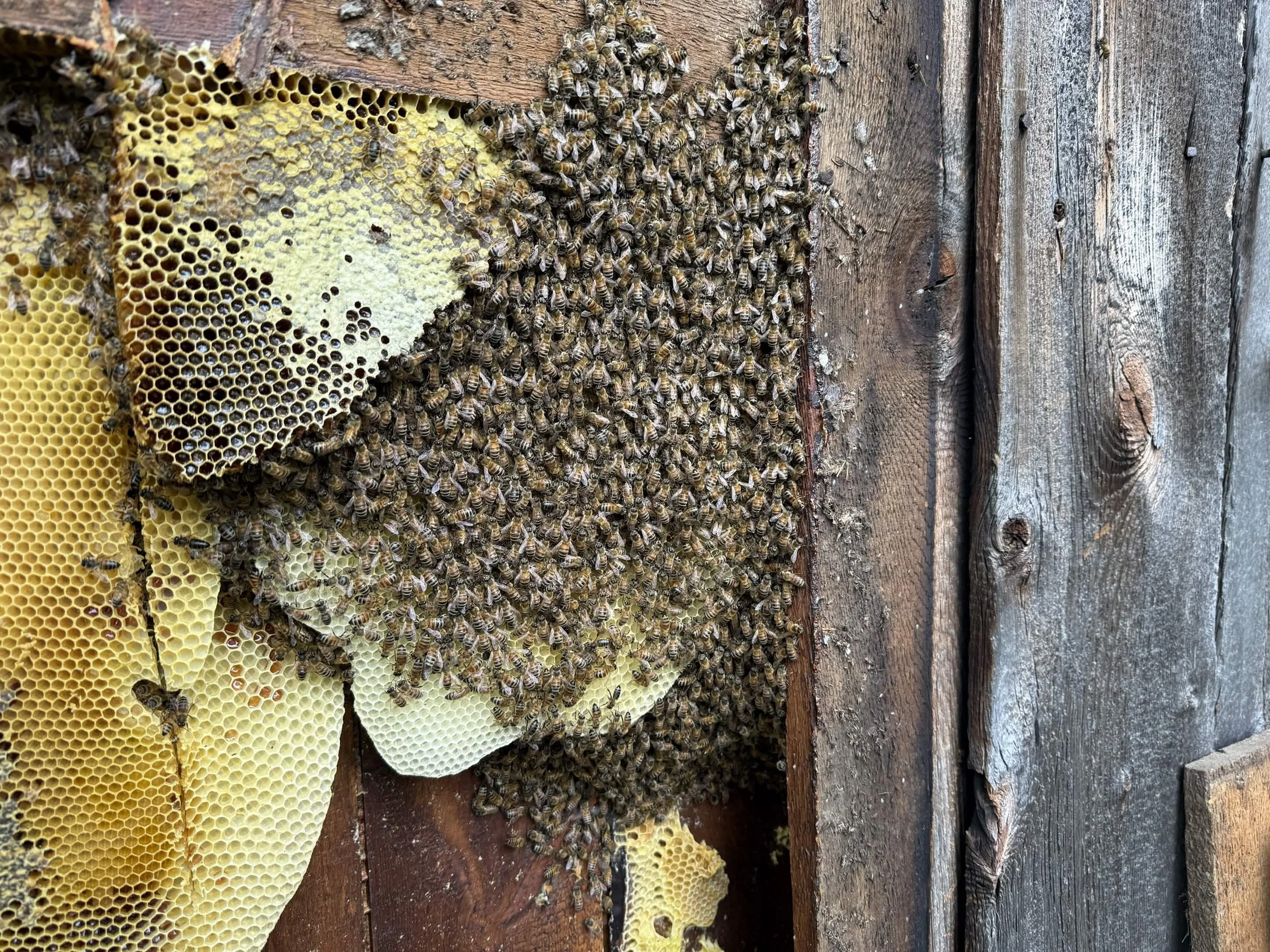
Fresh white comb with eggs and young larvae built next to older dark honey comb inside the Sandy Creek barn.
We were back in Sandy Creek today for a cutout at a property we had actually been to once before.
Last year, this hive swarmed and ended up in the next-door neighbor’s tree. We caught those bees, but the original colony was still inside this barn. From what we saw during this cutout, best guess is that the old colony failed sometime before or during winter.
A few weeks ago, bees moved back into the same spot. That makes sense. There was already comb, plenty of space, and a lot of old honey left behind. To a swarm looking for a home, that kind of cavity is pretty appealing.
Once we opened it up, the amount of honey was pretty wild. Most of it looked like dark fall honey from the previous colony. I tried a couple small pieces while working, and it was delicious.
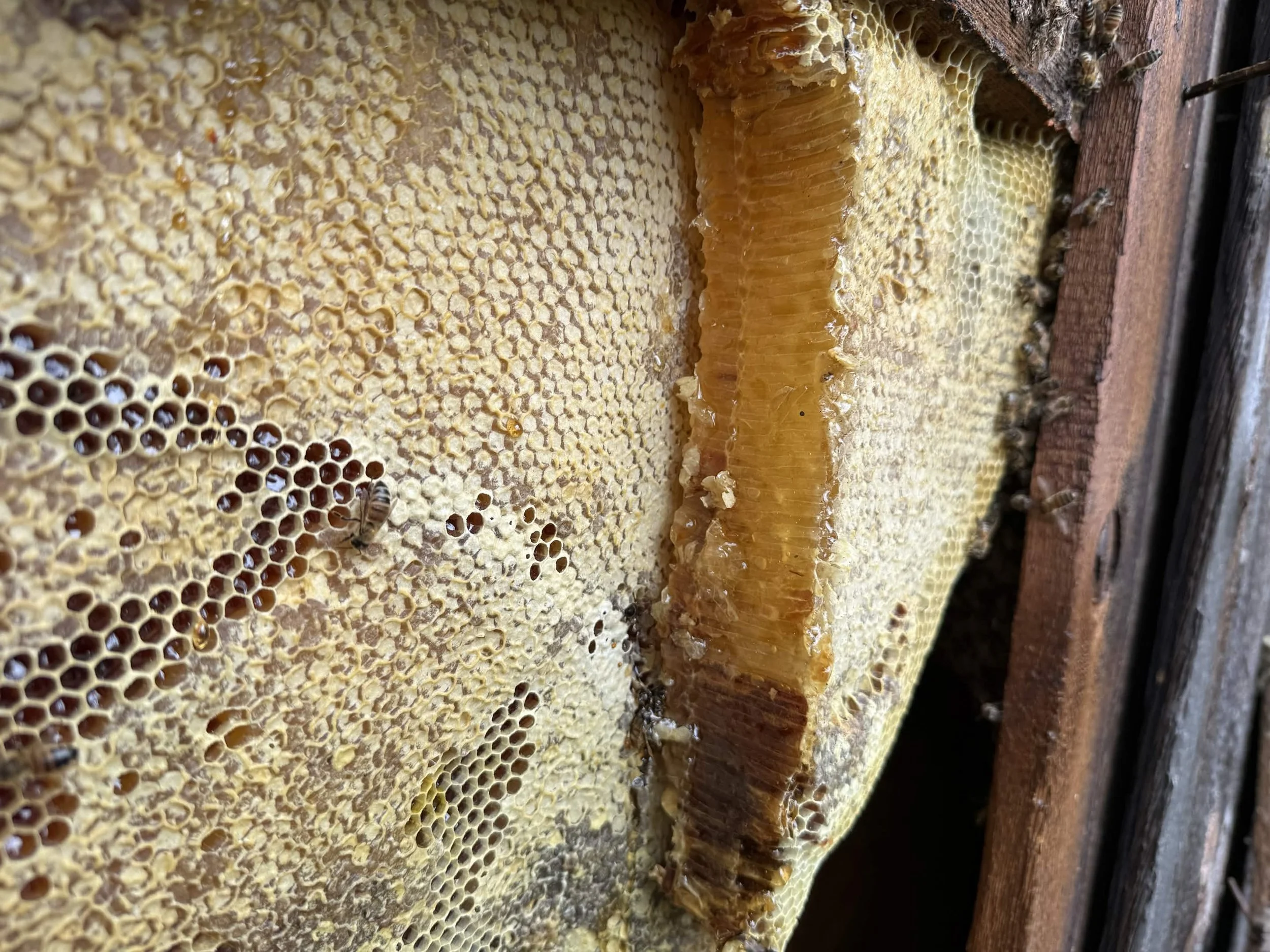
Thick honey comb from the cutout, with both lighter honey and darker honey stored in the wall.
In a spot like this, the important part is not only removing the bees that are there now. The old comb and honey need to come out too. If that material is left behind, it can attract more swarms later, draw in pests, and create problems inside the structure. Cleaning the cavity out gives the repair a much better chance of actually solving the issue instead of just covering it up for the next colony to find.
That meant opening the area, removing the bees and comb, cleaning the space out so it could be repaired and sealed up properly.
Our construction background helps a lot on jobs like this. It is not just about taking bees out. It is also about understanding how to open the wall without more damage, and how to put things back together when the removal is done.
If you see bees repeatedly going in and out of a wall, roofline, soffit, shed, or other structure, it is worth sending photos before spraying or sealing anything up. Sometimes it is a simple swarm. Other times, there is already a colony inside.
